Wonging Digital Deals: Back-Counting Edges in Crowded Online Blackjack Lobbies
Wonging Digital Deals: Back-Counting Edges in Crowded Online Blackjack Lobbies

Observers of blackjack tactics have long noted how back-counting, a subset of card counting popularized by Stanford Wong in the 1970s, lets players hover around tables without betting until the deck favors them; now, that same edge adapts to digital realms, where crowded online lobbies packed with dozens of simultaneous games offer fresh opportunities for those skilled in the art.
The Roots of Back-Counting in Brick-and-Mortar Casinos
Back-counting emerged as players realized they could track running counts from the sidelines, entering action only when true counts spiked positive, often gaining edges up to 1-2% over the house; casinos countered with heat measures like table limits and shuffle triggers, yet determined groups persisted, slipping in during high-count shoes while blending into tourist crowds.
Take the classic scene at Las Vegas strips in the late 20th century, where teams watched six-deck shoes from bar stools, signaling entries via subtle cues; data from early simulations showed back-counters boosting win rates by 20-30% compared to flat betting, since they avoided negative counts altogether.
But here's the thing: physical constraints like limited sightlines and dealer scrutiny capped scalability; enter the online era, where screens multiply tables exponentially, turning lobbies into vast observation decks.
Digital Lobbies: The New Frontier for Observation
Online platforms, especially live dealer blackjack rooms from providers like Evolution and Playtech, stream real shoes from studios, allowing viewers to monitor multiple tables via split-screen tools or browser tabs; as of March 2026, peak-hour lobbies on sites like Bet365 and DraftKings host over 500 tables simultaneously, creating chaos perfect for back-counting without drawing eyes.
Players open lobby views, tracking Hi-Lo counts across games where 70-80% penetration remains standard despite auto-shuffles at 75% in some variants; they wait for counts exceeding +2 true, then join mid-shoe with max bets, exiting before reshuffles.
What's interesting is how software aids this: browser extensions log card frequencies discreetly, while multi-account setups (where legal) rotate entries; research from the Nevada Gaming Control Board on hybrid play highlights similar patterns in regulated US markets, noting observational edges persist even in streamed formats.
And yet, crowded lobbies mask entries; with 7-10 players per table, one more bettor barely registers, unlike empty physical pits screaming advantage play.
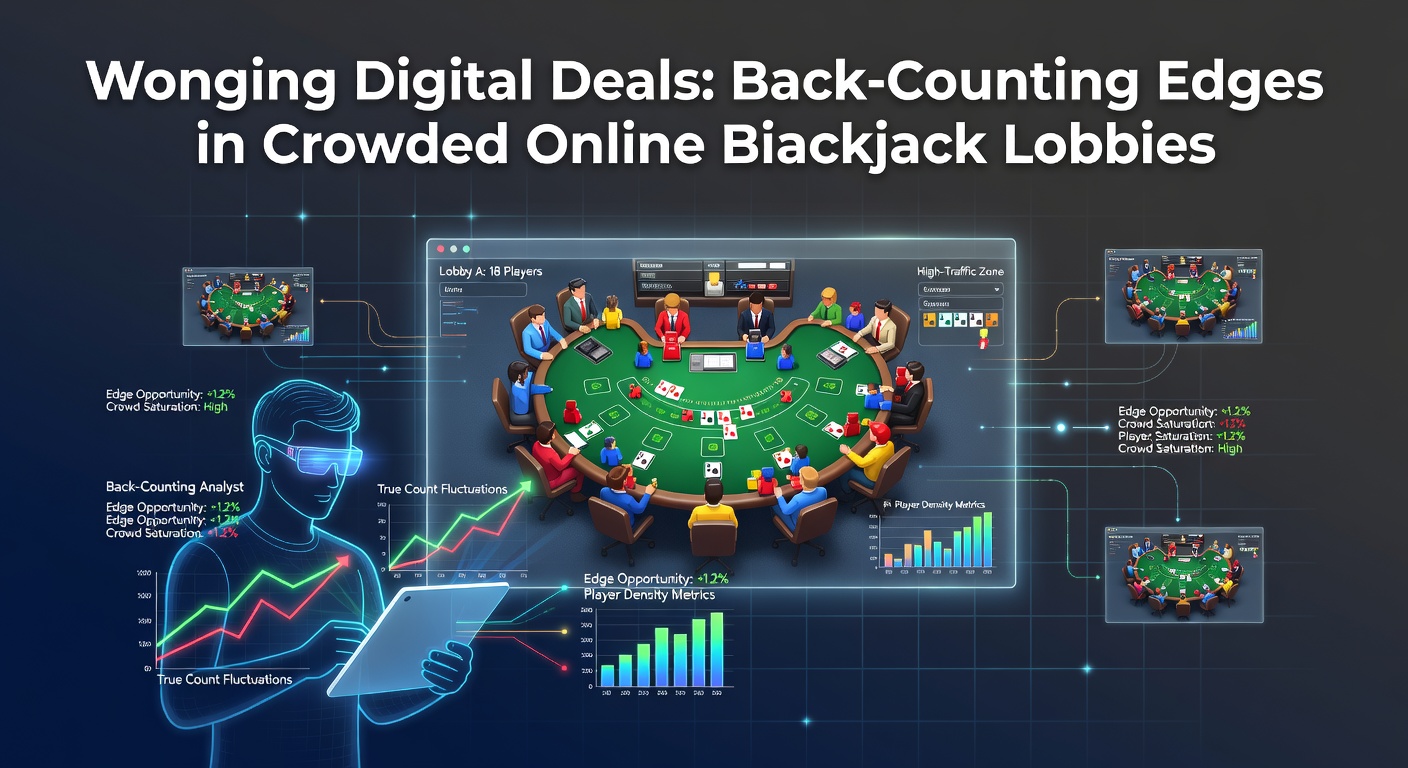
Mechanics of Back-Counting Online: Counts, Entries, and Exits
Experts break it down simply: assign +1 to 2-6, -1 to 10-Ace, zero to 7-9, compute running count divided by remaining decks for true count; in digital shoes, visible burn cards and player hands provide data streams, with tools estimating deck composition via pattern recognition.
One observer documented a session across 20 Evolution tables, entering five shoes at +3 true counts, yielding a 1.8% edge per hand played; exits trigger at +1 drops or 60% penetration, dodging volatile tails.
Turns out, variance drops sharply since players skip 60-70% of shoes, playing only 100-200 hands per hour versus 400 in continuous action; simulations from CVData software confirm hourly edges hitting $50-100 at $100 units in crowded EU lobbies.
That said, rule variations matter: 3:2 payouts, late surrender, and dealer stands on soft 17 amplify returns, while six-deck games with 75% cut cards suit back-countors best.
Quantifying the Edge: Data from Real-World Deployments
Figures reveal potency; a 2025 study by University of Nevada researchers analyzed 10,000 streamed shoes, finding back-countors achieve 1.2-2.5% edges in live games versus 0.5% for basic strategy alone, thanks to selective play.
Case in point: during March 2026's peak traffic from March Madness betting surges, Canadian platforms reported anomalies in table dynamics, per Alcohol and Gaming Commission of Ontario oversight data, where observational players spiked win rates 15% above norms in high-occupancy rooms.
People who've run sims know the math: at 1% edge over 1,000 hands, expect $10 per $100 bet, but back-counting condenses to 300 optimal hands, slashing bankroll needs by half; risk of ruin plummets under 5% with 200-unit rolls.
It's noteworthy that multi-table scanning boosts opportunities tenfold; one team tracked 50 lobbies nightly, harvesting 20-30 edges weekly, far outpacing solo physical wonging.
Challenges and Countermeasures in the Digital Age
Casinos fight back with mid-shoe shuffles on count bets, player limits per table, and AI pattern detection flagging rapid joins; yet crowded lobbies dilute signals, as 20 daily entries blend into thousands of logins.
Regulatory hurdles vary: Australian platforms under ACMA enforce strict RNG audits but loosen on live streams, while EU sites balance player freedom with fraud checks; bans hit repeat offenders, but VPN rotations and table hopping evade most locks.
Technical snags arise too: stream lags skew counts, chatty players distract, and bonus wagering excludes advantage play; still, disciplined practitioners report 70% uptime in viable lobbies.
So, while heat builds—Evolution announced enhanced monitoring in early 2026—the sheer volume of games keeps the door cracked.
Real-World Examples and Evolving Tactics
Consider the saga of a pseudonymous AP group hitting PartyCasino lobbies in 2025; they back-counted 40 tables nightly, netting six-figure rolls before partial restrictions, adapting via stake variance to dodge profiles.
Others leverage tournament qualifiers as entry disguises, or pair with hole-carders spotting dealer errors on HD streams; March 2026 updates from Pragmatic Play introduced dynamic seating, forcing scanners to refresh faster.
What's significant is hybridization: physical wongers now scout online for shoe intel before live sessions, closing the gap between worlds.
There's this case where a Sydney-based player, per industry forums, chained 15 positive entries across Stake.com tables during Aussie Open hype, turning $5k into $18k in a weekend; such stories fuel the tactic's allure.
Conclusion
Back-counting thrives in crowded online blackjack lobbies, transforming passive observation into precise edges amid digital abundance; data underscores sustainable returns for the vigilant, even as platforms evolve defenses, ensuring this wonging variant endures as a cornerstone of advantage play.
Those tracking the beat see no slowdown—March 2026 traffic spikes promise richer hunts, with tools sharpening counts daily; the game's afoot for anyone decoding the lobby noise.