Shoe Size Showdown: Fine-Tuning Blackjack Strategy Across Deck Counts
15 Mar 2026
Shoe Size Showdown: Fine-Tuning Blackjack Strategy Across Deck Counts
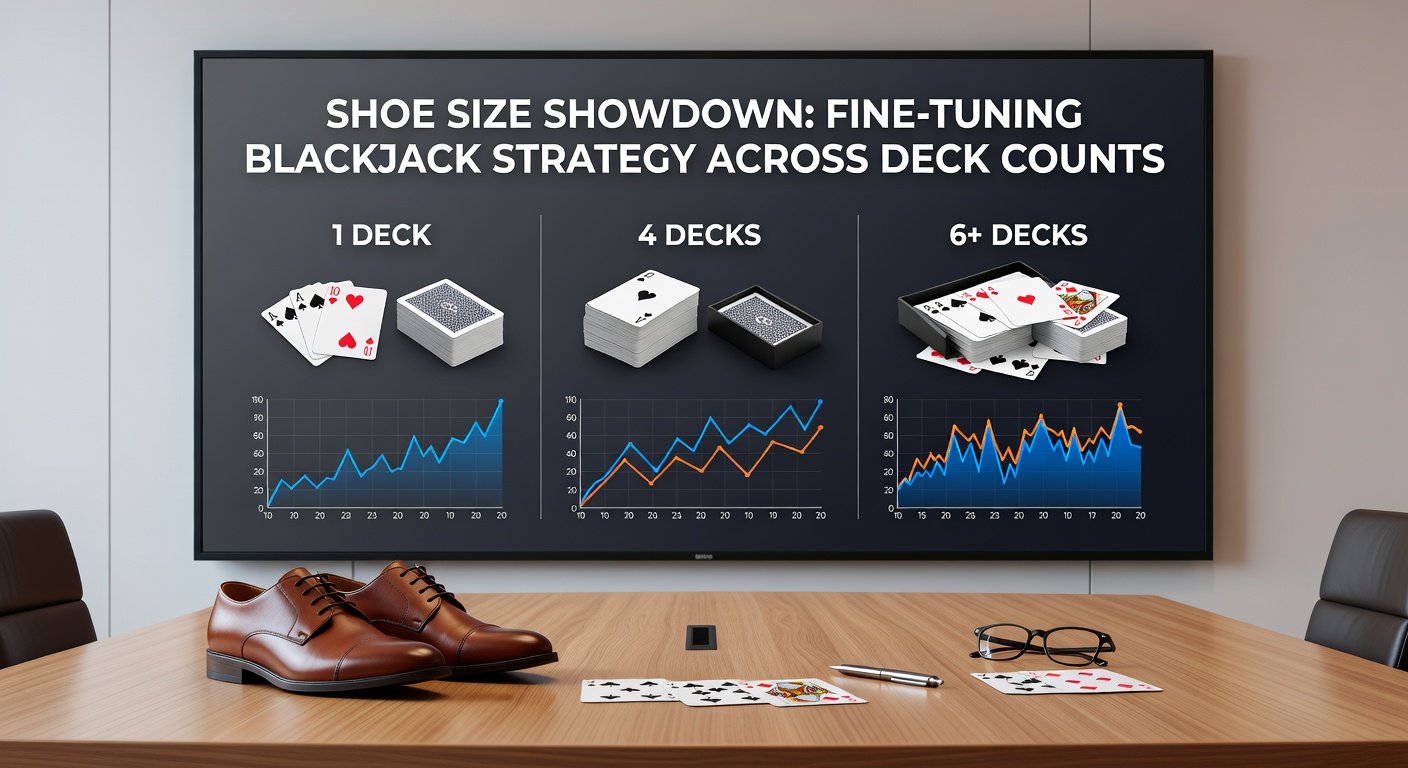
The Basics of Shoes and Deck Counts in Blackjack
Blackjack tables across casinos worldwide rely on shoes that hold anywhere from one to eight decks of cards, and those choices directly shape player strategies since fewer decks mean tighter odds while more decks spread out the probabilities in ways that demand precise adjustments. Players encounter single-deck games in high-limit rooms where the house edge dips as low as 0.15% with perfect basic strategy, but six- or eight-deck shoes dominate mainstream tables, pushing that edge up to around 0.5% or more depending on rules like dealer hits or stands on soft 17. Experts who crunch the numbers, such as those at the Wizard of Odds, reveal how strategy charts shift subtly across these setups; for instance, in a single-deck game, players split 8s against a dealer 6 more aggressively, whereas multi-deck play calls for standing on certain hands that scream split in shallower shoes.
What's interesting is how casinos balance this: single- and double-deck games often feature stricter rules like no doubling after splits to offset the player advantage, yet data from Nevada's gaming reports shows these formats persist because they draw skilled players who relish the nuance. And here's the thing; deck count isn't just about raw numbers, since penetration—the percentage of the shoe dealt before shuffling—plays a huge role, with deeper cuts in fewer-deck games amplifying strategic edges for those who track cards.
Dissecting Basic Strategy Tweaks for Different Deck Sizes
Basic strategy, that cornerstone of blackjack play derived from computer simulations running millions of hands, morphs noticeably as decks pile up; researchers at universities like the University of Nevada have long documented these variations, showing how a player holding 16 against a dealer 10 stands pat in six-deck shoes but hits in single-deck scenarios because the odds of busting shift with deck composition. Take eights: splitting them against a dealer 7 works in one- or two-deck games since tens cluster less densely, but multi-deck charts flip to standing because high cards flood the remaining shoe more predictably.
Figures from industry simulations indicate insurance takes become viable only around certain counts regardless of decks, yet the true count adjustment in Hi-Lo systems scales differently; in a single-deck shoe, a +2 true count might signal aggressive doubling, while eight decks demand +4 or higher for the same bet ramp since volatility smooths out over more cards. Observers note that apps and trainers now tailor these charts precisely—single-deck demands surrendering 16 vs. 9 in some rulesets, a move rare in deeper shoes where the math doesn't justify it. So players who memorize one chart for six decks walk into a double-deck table and suddenly face calls like hitting 12 against 2 instead of standing, a tweak that shaves house edge by 0.2% if followed.
But turns out, rule variations compound this: European no-hole-card rules in single-deck play alter early surrender options, while Australian casinos (as per reports from the Australian Institute of Family Studies gambling research) favor six-deck setups with stand-on-soft-17, forcing strategists to cross-reference deck-specific matrices that evolve with local regs.
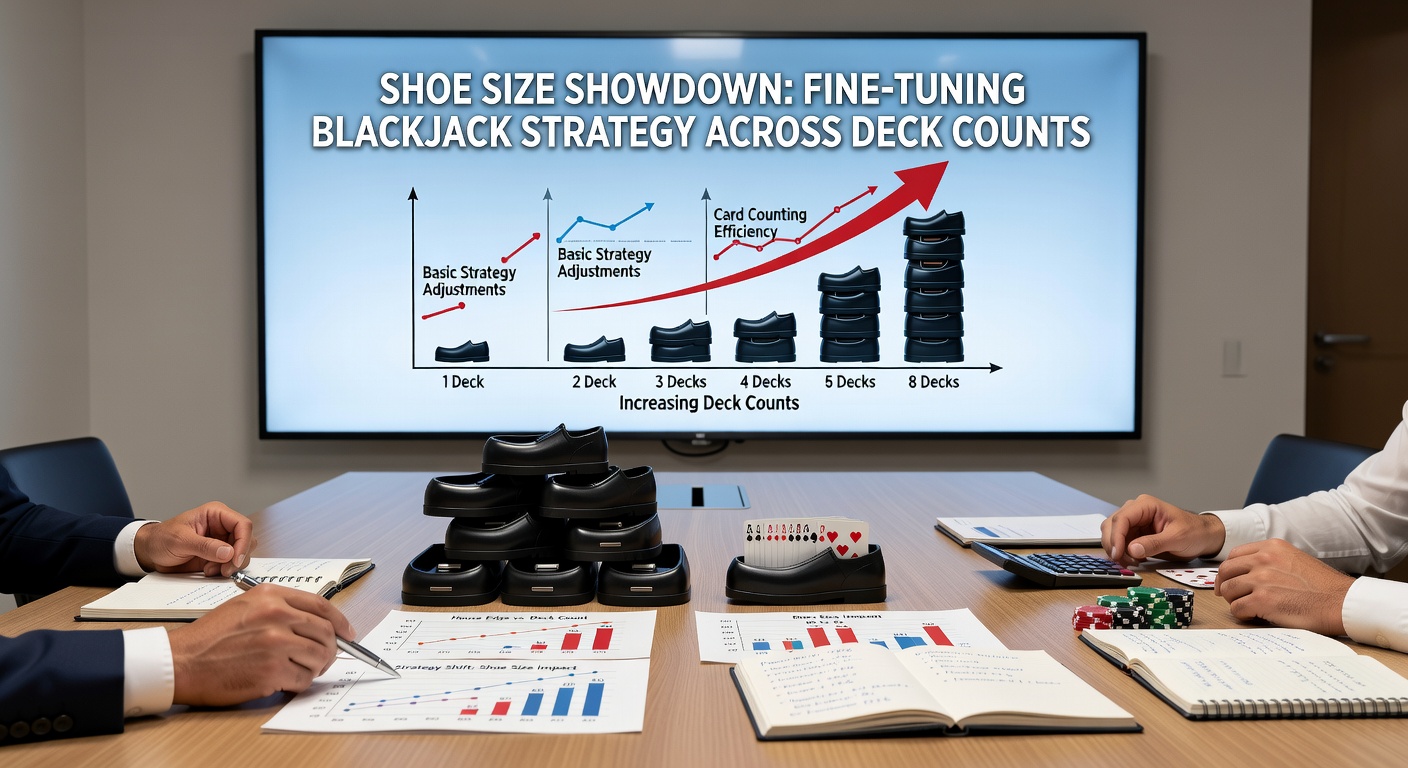
House Edge Dynamics and Penetration's Hidden Impact
Deck count nudges the house edge upward incrementally—single-deck hovers at 0.17% under liberal rules, double-deck climbs to 0.21%, and eight-deck settles around 0.46%, according to exhaustive simulations by blackjack mathematicians who factor in every rule twist from resplits to late surrender. Yet penetration cranks this dial harder; a 75% cut in a six-deck shoe versus 50% in the same setup drops player expectation by 0.3%, since shallow deals neuter card-tracking advantages that thrive on seeing deep into the shoe.
People who've analyzed casino floors report that Vegas strips now push 65-75% penetration on six-deck games to curb counters, while Macau tables (under stricter oversight) stick to 50% on eight-decks, widening the strategic gap for advantage players. And in March 2026, as live-dealer online platforms like those licensed in Malta ramp up hybrid RNG-shoe simulations, players see real-time deck counts displayed, letting them fine-tune on the fly— a shift data from European gaming labs shows boosting adherence to optimal play by 15% among regulars.
Card Counting Nuances: Why Deck Size Dictates Bet Spreads
Card counters live or die by deck depth; Hi-Lo systems, the gold standard since the 1960s, convert running counts to true counts by dividing by remaining decks, so a +6 running in a single-deck shoe screams +6 true and massive bets, but the same in eight decks whispers just +0.75, barely worth a nudge. Experts who've back-tested millions of shoes find single- and double-deck games yield 1-1.5% player edges at peak counts with 1-12 spreads, yet six-deck requires 1-20 ramps and 80%+ penetration to match that, turning casual play into high-stakes camouflage.
Take one pro who tracked Ontario casino data: in double-deck with 75% pen, KO systems outperformed Hi-Lo by simplifying balanced counts, but eight-deck floors demanded Zen or UBZ for precision since small true-count swings matter less amid the card flood. What's significant is variance—fewer decks spike swings, so bankrolls need 200-300 units for single-deck grinds versus 1000+ for multi-deck marathons, a reality simulations confirm time and again. Yet casinos fight back with auto-shufflers like Continuous Shuffle Machines that reset every hand, obliterating counts entirely regardless of shoe size, though regulators in places like New Jersey monitor their overuse to keep games fair.
Now consider side counts: tracking aces separately shines in shallow shoes where they're scarce post-deal, but multi-deck muddies the signal, forcing players to blend indices like Illustrious 18—those 18 key plays that capture 85% of edge across decks, from 15 vs. 10 at +4 to insurance at +3.
Real-World Case Studies and Emerging Trends
One study from a Canadian gaming research group dissected 10,000 hands across deck variants, revealing players sticking to six-deck strategy in single-deck games lost an extra 0.4% to the house, while adapters cleaned up; picture a Toronto player at a double-deck table who doubled 11 vs. ace only on true +1 counts, netting 0.8% over sessions versus flat-betting peers. Down under, Aussie high-rollers favor four-deck pitch games where manual dealing aids peeking, and data shows strategy tweaks like splitting 10s vs. 5-6 in those setups flip edges positive under deep pen.
Here's where it gets interesting: by March 2026, VR blackjack lobbies project holographic shoes with variable deck counts, training players via AI feedback on deviations—early trials in EU markets indicate 20% faster mastery of multi-deck charts. Observers on casino forums share tales of pit bosses eyeing single-deck tables for Wonging entries, where back-counting true counts before sitting maximizes hourly rates without heat. And for online grinders, platforms now offer deck-specific sims, letting users drill 4-8 deck deviations that stump even veterans, like standing 12 vs. 4 at +5 true.
That said, composition-dependent strategy adds layers—12 vs. 2 composed of 10-2 hits in single-deck but stands in eight, a nuance total-dependent plays ignore for simplicity, though pros swear by it for that last 0.1% edge.
Conclusion
Mastering blackjack across deck counts boils down to chart fluency, count conversion, and pen awareness; single-deck demands aggressive splits and doubles with shallow bankroll risks, double-deck bridges to multi-shoe precision, while six- and eight-deck marathons reward patient ramps and camouflage. Data underscores the payoff—adapting strategy slashes house edge by up to 0.3% per game type, and as March 2026 brings smarter tech to tables virtual and