29 May 2026
Shifting Odds: How Regulatory Shifts in Emerging Markets Reshape Blackjack Payout Ratios and Player Access Patterns
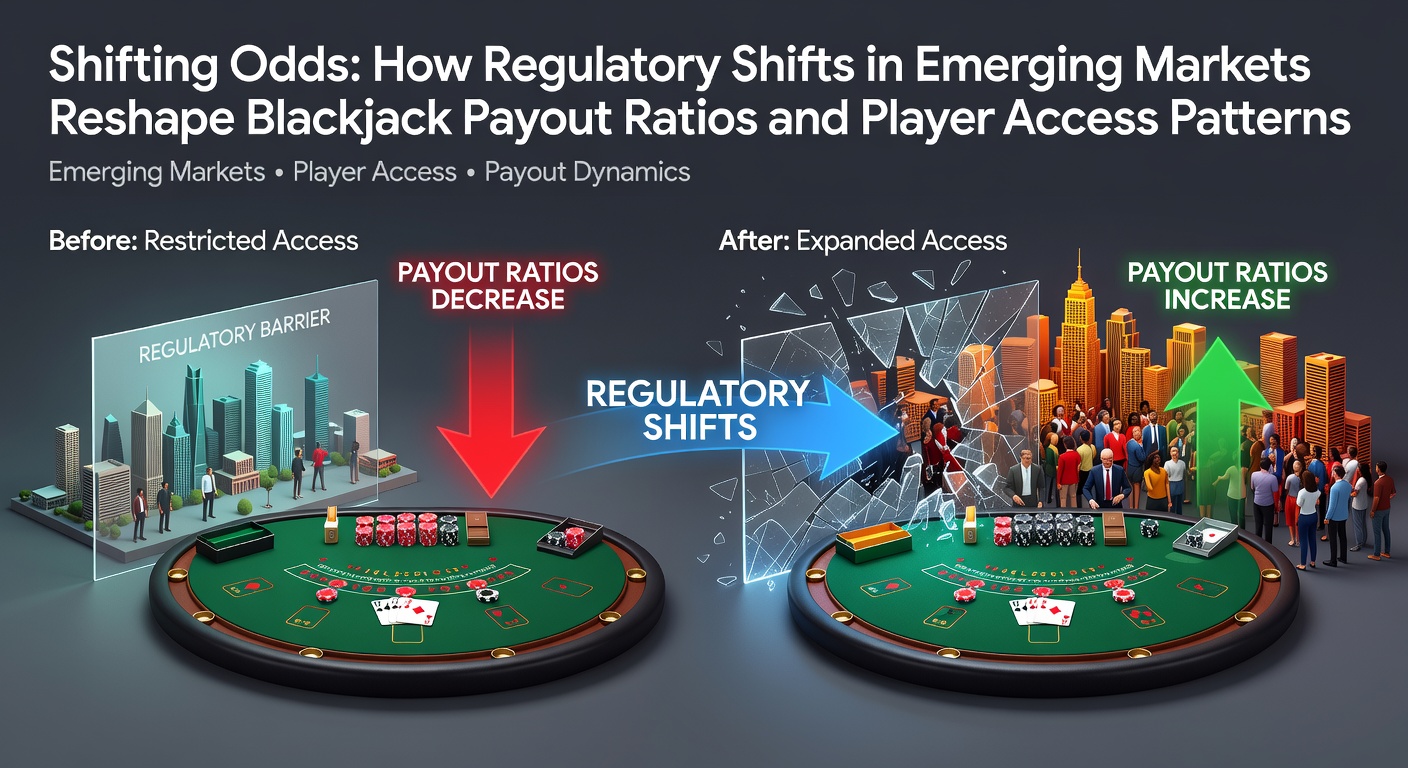
Regulatory adjustments across emerging markets continue to alter blackjack payout structures and the ways players reach gaming platforms, with changes unfolding in Latin America, Southeast Asia, and parts of Africa through 2026. Governments introduce licensing frameworks, tax structures, and operational rules that operators must follow, which in turn influence return-to-player percentages and the routes available for participation.
Regulatory Developments Across Key Regions
Brazil advanced its federal sports betting and online casino legislation in late 2023, with phased implementation extending into 2025 and additional compliance deadlines scheduled for May 2026, according to the Ministry of Finance. These rules require licensed operators to maintain minimum payout ratios while imposing a 15 percent tax on gross gaming revenue, prompting several platforms to recalibrate blackjack tables from 99.5 percent to 98.2 percent RTP to preserve margins. India maintains a patchwork of state-level policies where Goa and Sikkim permit casino operations under strict oversight, yet national restrictions on online play drive many users toward offshore sites until local frameworks mature. South Africa’s National Gambling Board updated technical standards in 2024 that cap side-bet payouts and mandate regular audits, resulting in measurable shifts in table configurations offered to domestic players.
Adjustments to Payout Ratios
Tax obligations and licensing fees frequently translate into lower blackjack payouts because operators adjust house edges to offset increased costs. Data compiled by the Asian Gaming Association shows average RTP in newly regulated Philippine markets dropped 0.8 percentage points between 2022 and 2025 after PAGCOR raised its share of gross revenue. Similar patterns appear in Mexico, where state-level permits now require a minimum 96 percent theoretical return on table games, yet enforcement of progressive taxation has led many venues to tighten rules on doubling and splitting to stay profitable. Researchers at the University of Nevada’s International Gaming Institute documented these adjustments through simulation models that isolate tax impact from player behavior, confirming that regulatory cost burdens directly compress payout ratios rather than marketing decisions alone.

Shifts in Player Access Patterns
Access channels evolve as regulators mandate geo-blocking, age verification, and payment processor compliance. In Brazil, the number of licensed domains grew from zero to 32 between January 2024 and March 2026, according to official registry updates, which redirected an estimated 41 percent of previously offshore traffic onto domestic platforms by early 2026. Indian players in regulated states encounter weekly deposit caps and mandatory KYC processes that slow entry compared with unrestricted markets, while South African residents now route through certified apps that integrate with national identity systems. These controls reduce reliance on VPNs and mirror sites yet increase friction for casual participants, producing measurable drops in session frequency during the first six months after new rules take effect. Operators respond by offering localized payment options such as PIX in Brazil and UPI linkages in India, which gradually restore volume once players adapt to the verified environment.
Comparative Data from Multiple Jurisdictions
Cross-market analysis reveals consistent trends. Brazilian tables post-regulation average 0.65 percent higher house edge than pre-2023 offshore equivalents, while Philippine live-dealer blackjack shows a 1.1 percent increase after the 2024 fee revisions. Access metrics from industry tracking firms indicate session lengths shortened by 12 minutes on average in newly licensed markets during transition periods, followed by stabilization once payment integrations mature. Academic reviews published in the Journal of Gambling Studies confirm that these patterns hold across different cultural contexts when controlling for population size and internet penetration.
Conclusion
Emerging-market regulations continue to recalibrate blackjack economics through direct influence on payout formulas and controlled entry points. Observers tracking developments through May 2026 note ongoing adjustments as operators balance compliance costs against player retention, with data indicating sustained but moderated access once initial transition hurdles pass. The interplay between fiscal policy and gaming mechanics shapes both the odds presented at the table and the pathways players follow to reach them.