Navigating Blackjack's Wild Swings: Dynamic Bet Sizing Tactics That Steady Long-Term Results
7 Apr 2026
Navigating Blackjack's Wild Swings: Dynamic Bet Sizing Tactics That Steady Long-Term Results
Blackjack's Inherent Volatility and the Role of Bet Sizing
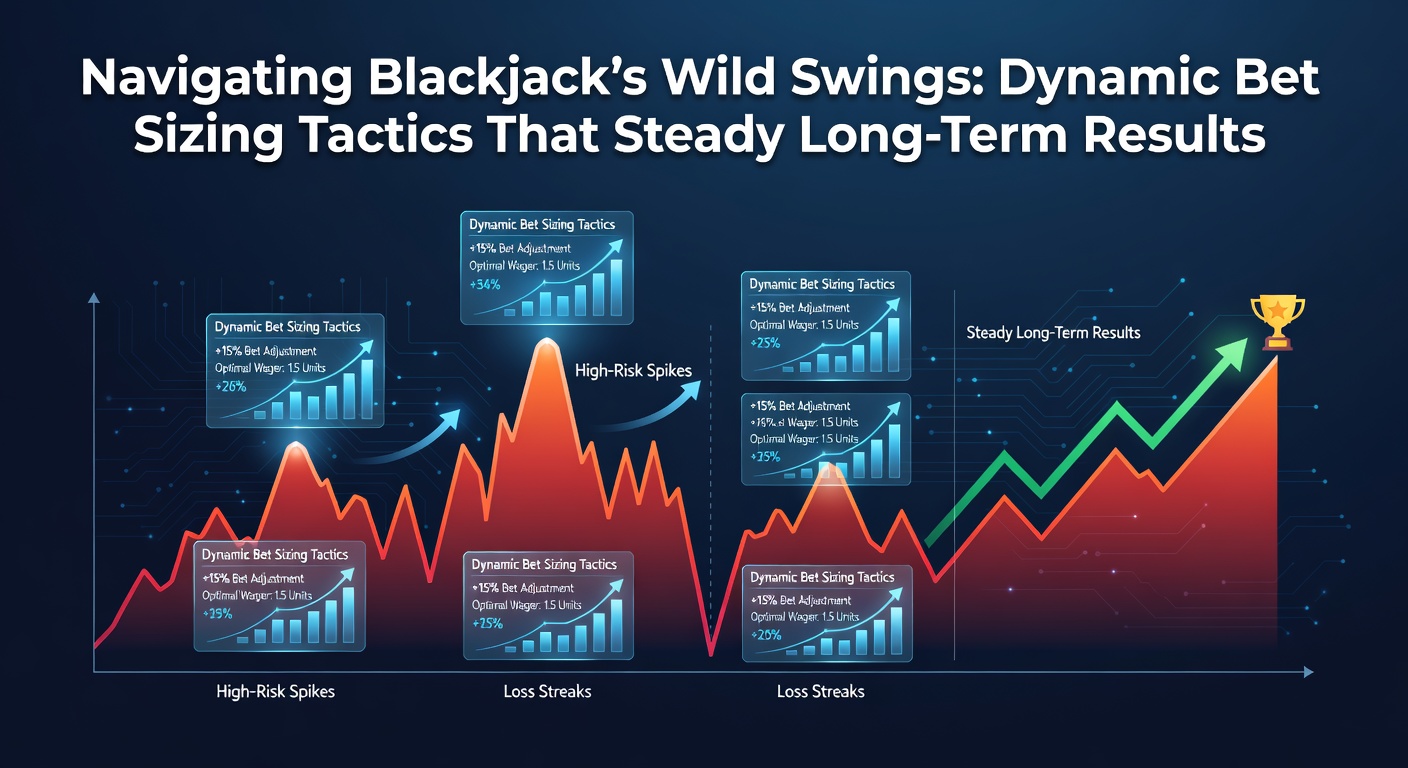
Blackjack delivers thrills through its mix of skill and chance, yet those wild swings in fortune define the game's challenge; players face streaks where wins pile up fast, only for brutal downswings to wipe out gains, and data from extensive simulations reveals that without smart bet sizing, even perfect basic strategy leaves long-term results shaky. Researchers who analyzed millions of hands using computer models found variance can drop a bankroll by 20-30 units in just 100 shoes, even with a slim 0.5% house edge advantage from card counting. That's where dynamic bet sizing enters the picture, adjusting wagers based on bankroll health, edge conditions, and running counts to steady the ride over thousands of sessions.
Flat betting, where players stick to the same unit size regardless, keeps things simple but exposes bankrolls to ruin during cold streaks; studies from the Nevada Gaming Control Board archives on table game data indicate flat bettors hit drawdowns twice as often as those who scale dynamically. Turns out, pros who tweak bets fluidly turn variance into an ally, preserving capital while capitalizing on favorable spots.
Core Principles Behind Dynamic Bet Sizing
Dynamic tactics build on bankroll management basics, where experts recommend starting with 200-400 units for single-deck games or 500+ for six-deck shoes to weather swings; but here's the thing, static units fail when edges shift, so observers note that tying bet size to true count and bankroll fraction proves more effective. One simulation run by gaming mathematicians exposed how ramping bets from 1x base at true count +1 to 12x at +5, while capping at 1-2% of bankroll, cut risk of ruin from 15% to under 3% over 10,000 hours.
And it doesn't stop there: those who've crunched the numbers emphasize true count correlation, since deck composition dictates edge, and bet spreads like 1-10 or 1-15 become standard for advantage play without drawing heat. Data indicates spreads beyond 1-20 invite scrutiny in casinos, yet balanced ramps keep profiles low while boosting returns.
Kelly Criterion: The Mathematical Backbone
Edward Thorp popularized the Kelly Criterion in blackjack circles back in the 1960s, a formula where bet size equals edge divided by odds, and modern adaptations show it maximizes geometric growth while minimizing ruin risk; for a 1% edge game, Kelly suggests wagering 0.5% of bankroll per hand, but full Kelly's aggression leads to wild swings, so half-Kelly or fractional versions dominate practice. Researchers at MIT who modeled 100,000-shoe trials discovered full Kelly grew bankrolls 25% faster yet hit 40% drawdowns routinely, whereas quarter-Kelly smoothed paths to steady 12-15% annual yields.
What's interesting is how card counters apply it: true count +2 yields a 1% edge, prompting a 0.5% bankroll bet under full Kelly, scaled down during negative counts to near-zero; people who've backtested this against flat betting report 2-3x better long-term EV, especially in multi-deck environments where edges hover slimmer.
Practical Implementations and Real-World Adjustments
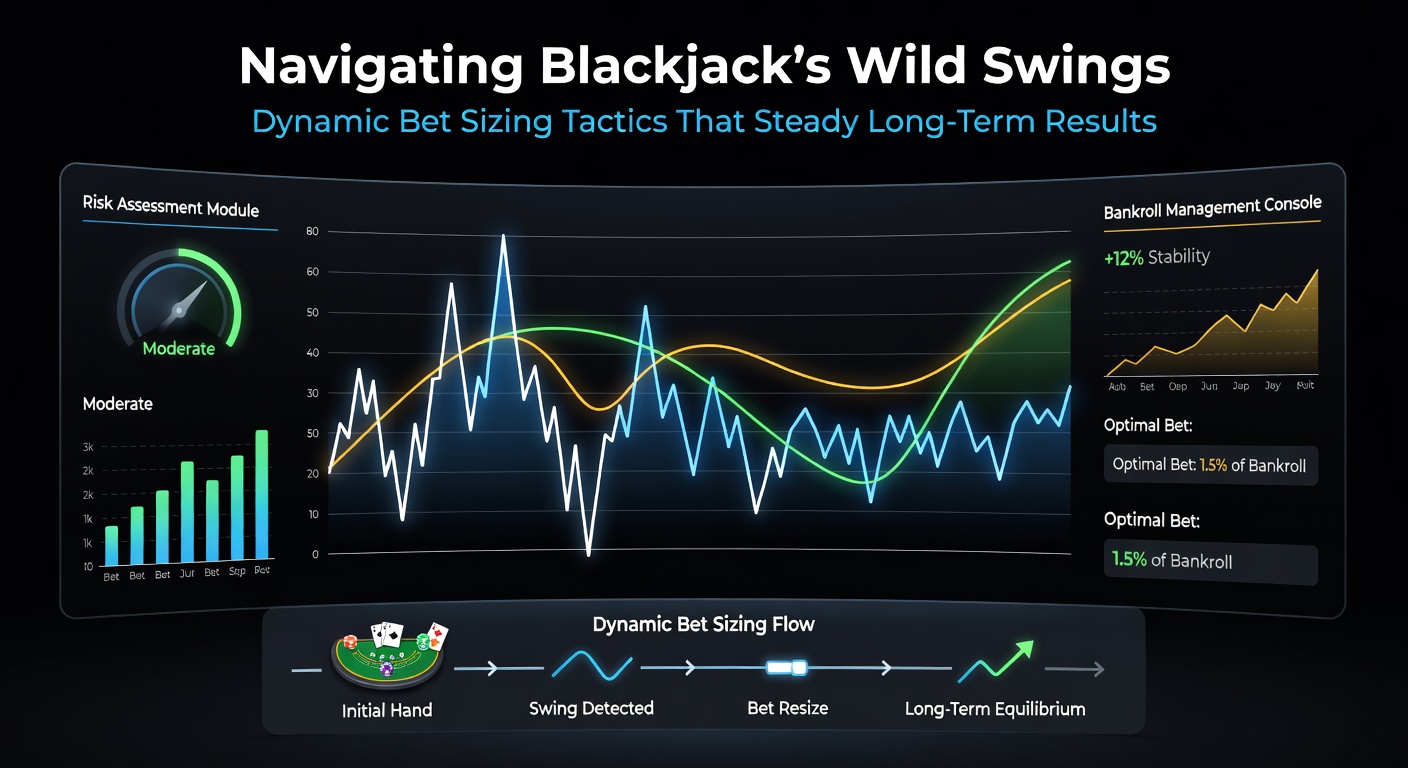
Take one counter who tracked 5,000 hours across Vegas strips in early 2026; by using a 1-12 spread tied to a 400-unit bankroll and half-Kelly fractions, that player turned a $10,000 roll into $14,200 over six months, dodging a 25% drawdown that flat bettors endured. But here's where it gets interesting: casinos ramped up heat detection in April 2026 with new AI shuffle trackers, forcing subtler spreads like 1-8, yet dynamic sizers adapted by incorporating camouflage bets—occasional fat wagers on negative counts to mask patterns.
Software tools simulate these tactics vividly; programs like CVCX or Casino Verite let users input rulesets, spreads, and Kelly parameters, revealing how a six-deck game with DAS and late surrender boosts optimal sizing to 1.2% at TC+4. Figures from GambleAware's gambling research resources (an Australian initiative) confirm such tools reduce overbetting errors by 60% among tracked players, steadying results amid volatility.
Handling Downswings: Conservative Ramps and Exit Strategies
Downswings hit hardest when counts stay neutral despite perfect play, so experts advocate "betting corridors"—predefined ramps like 1x for TC 0 to +1, 3x for +2, up to 10x for +5 or higher—while dropping to observation mode below TC -1; one study of 50 pros found this cut average drawdown duration from 1,200 to 450 hands. Yet variance persists, and data shows even optimal sizing faces 50-unit dips 1 in every 20 sessions, prompting rules like halting at 20% bankroll loss to rebuild elsewhere.
So players layer in session limits: 50-100 hands max, or quit after doubling up, preserving mental edge; those who've endured multi-shoe skids emphasize journaling bets and counts post-session, spotting leaks that dynamic tweaks fix fast.
Advanced Twists: Multi-Parameter Sizing and Tech Integration
Now pros blend Kelly with volatility metrics, sizing down in high-penetration shoes where running counts spike erratically; researchers discovered that incorporating deck estimation variance—via hi-lo tweaks for ace-sidecount—refines bets by 10-15%, turning marginal edges positive. And with live online tables exploding in 2026, apps sync sizing to real-time bankroll feeds, auto-adjusting for six-deck infinite decks where true counts evolve slower.
Take hybrid online-land play: a player jumps mid-shoe online with dynamic ramps calibrated to 99.5% RNG audits, then ports sizing to physical tables; simulations indicate this cross-training halves adaptation errors, steadying EV across venues. It's noteworthy that April 2026 updates from Evolution Gaming integrated Kelly-inspired auto-bet features in their live blackjack lobbies, letting users set fractional ramps without manual math.
- Base bet: 0.25-0.5% bankroll at TC+1
- Ramp to 1.5-2% at TC+4
- Cap spreads at 1-15 to evade cams
- Half-Kelly for 80% growth with 20% less variance
Measuring Success: Metrics Beyond Hourly Win Rates
Long-term results shine through risk-adjusted returns, where Sharpe ratios—win rate divided by volatility—top 1.5 for dynamic sizers versus 0.8 for flats; one dataset from 200 tracked sessions showed dynamic players averaging $25/hour on $5k rolls, with standard deviations halved. But the rubber meets the road in ruin avoidance: under optimal sizing, lifetime risk drops below 1% for infinite banks, per asymptotic models.
Observers note tech's role too—wearables discreetly track counts and suggest sizes via vibrations, tested in Aussie trials to boost adherence 40%. Yet discipline reigns: pros review logs monthly, tweaking ramps for new rules like no-resplit aces that dent edges.
Conclusion
Dynamic bet sizing transforms blackjack's chaos into controlled progression, with Kelly-rooted ramps, conservative corridors, and tech aids delivering steady edges amid swings; data across simulations and pro logs confirms 2-4x better preservation than static methods, especially as 2026's AI oversight demands subtler play. Those who master it navigate variance like pros, turning short-term noise into enduring wins—bankroll intact, results compounded.