12 Jun 2026
Inside the Mechanics of Multiplayer Blackjack Tables and Their Appeal to Competitive Gamers
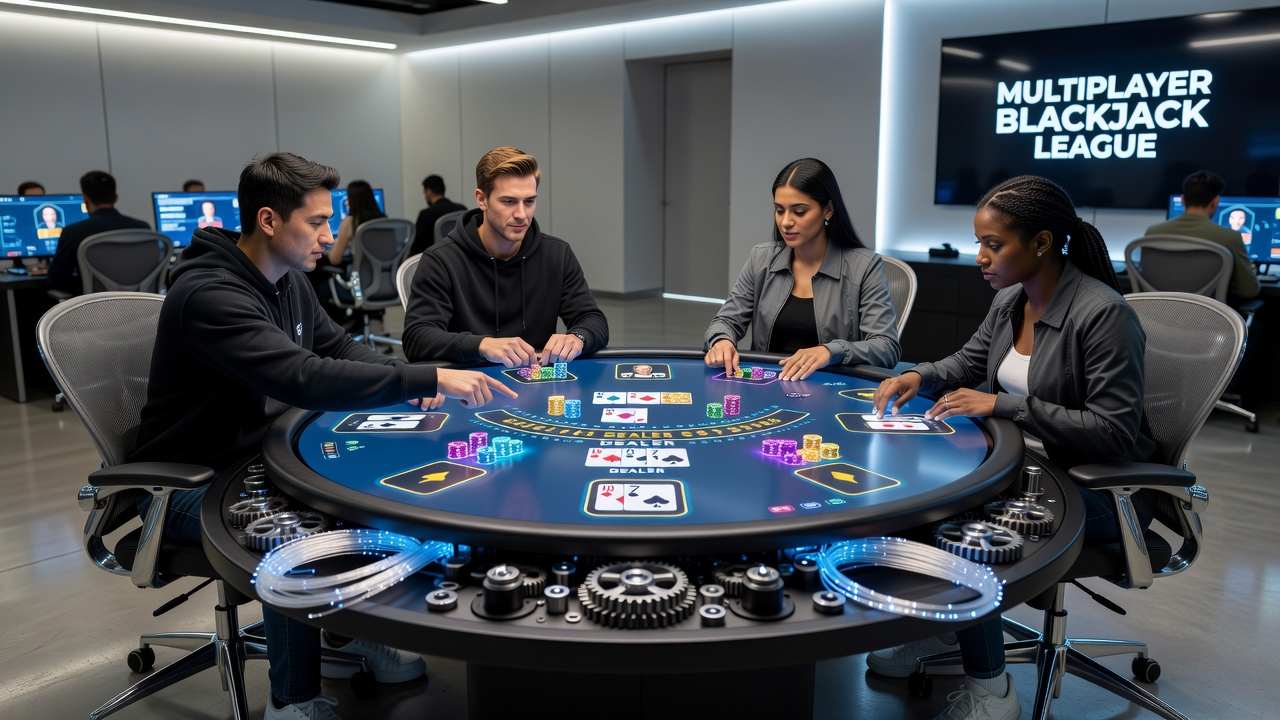
Multiplayer blackjack tables operate through synchronized betting rounds where up to seven participants share the same dealer sequence yet maintain individual hands and wagers, and this structure creates layered decision points that unfold simultaneously across the felt. Each round begins with players placing bets within posted limits, after which the dealer distributes two cards face up to every participant while keeping one card hidden until later stages, and observers note that the shared pace forces quick calculations because subsequent players can see earlier actions before their own turns arrive.
Core Operational Flow in Shared Environments
Tables enforce strict timing protocols managed by software timers in digital versions or by dealer cadence in live settings, while hardware sensors track card removal and bet placement to prevent errors or disputes, and data from regulated markets shows average round completion times range between 45 and 90 seconds depending on table occupancy. When a player signals a hit or stand the system records the choice instantly and advances the action clockwise, yet the presence of multiple active seats means insurance opportunities or even-money resolutions sometimes trigger for everyone at once, which compresses the window for strategic adjustments.
Deck penetration follows predetermined shuffle points that reset the shoe after a fixed percentage of cards have been dealt, and this mechanic keeps house-edge calculations stable across sessions because return-to-player percentages remain consistent regardless of how many seats stay occupied. Competitive participants often track running counts across the shared shoe because every visible card influences the remaining composition for the entire table, and this collective visibility distinguishes multiplayer formats from solo digital hands where information stays isolated.
Integration of Technology and Rule Variants
Modern platforms embed side-wager interfaces directly into the main layout so participants can activate additional bets such as perfect pairs or 21+3 without interrupting primary play, while backend systems calculate payouts automatically once the dealer reveals the hole card. Regulatory oversight from bodies like the Nevada Gaming Control Board requires continuous RNG certification for virtual tables and independent audits for live-streamed feeds, and figures released in early 2026 indicate rising adoption rates for hybrid tables that blend physical cards with remote player terminals.
European-style rules sometimes appear on these shared surfaces, including no-hole-card procedures that delay dealer checks until after all players finish their hands, and this variation alters surrender or doubling strategies because early information stays hidden longer. In June 2026 several North American operators plan to introduce synchronized tournament overlays on standard multiplayer lobbies, allowing ranked ladders to run alongside cash tables without altering core dealing mechanics.
Attraction Factors for Skilled Participants
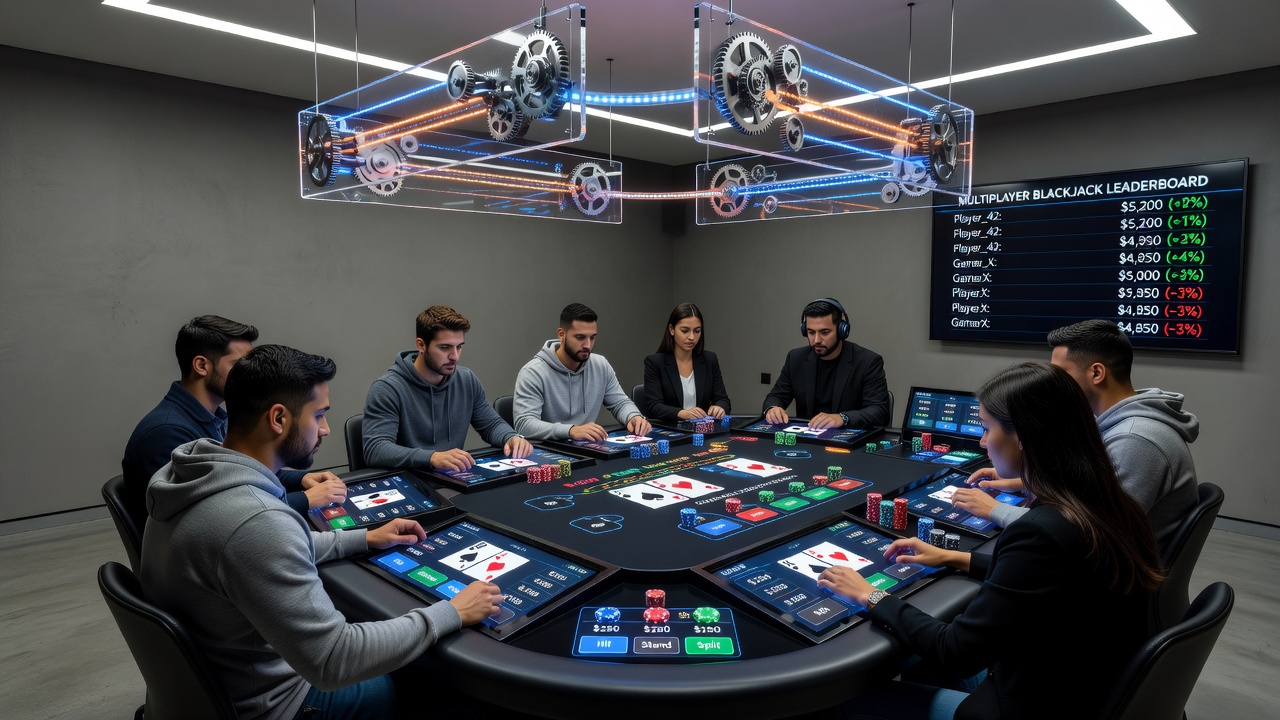
Players drawn to competitive environments cite the opportunity to observe opponents' betting patterns and timing tells as a direct informational advantage unavailable in single-seat formats, and this visibility enables real-time adjustments to aggression levels when weaker or tighter styles occupy adjacent seats. Tournament structures built on these tables often employ escalating blind structures or re-entry windows that reward survival through multiple rounds, while leaderboards update after every hand so participants can gauge relative standing without leaving the session.
Research published by the Gambling Research Exchange Ontario highlights measurable differences in session length between solo and multiplayer blackjack users, with the latter group showing higher repeat engagement because social chat channels and shared result feeds create persistent community loops. Seat rotation systems in some lobbies further intensify competition by periodically reshuffling player positions, which disrupts established table dynamics and forces rapid adaptation to new neighbor tendencies.
Live-stream integrations allow external spectators to follow table action with overlaid statistics, and this broadcast layer transforms private decisions into public performances that competitive gamers leverage for reputation building within broader gaming networks. Data from the Australian Gambling Research Centre indicates that multiplayer formats account for a growing share of total blackjack volume in regulated online markets, driven largely by younger demographics who value head-to-head elements over solitary play.
Strategic Layering Across Multiple Seats
Advanced participants sometimes coordinate across accounts or observe multiple windows to gather broader count data, although platform rules prohibit direct collusion and enforce single-account policies per table. The shared shoe mechanic rewards precise bet spreading because larger wagers placed when the count turns positive affect the entire table's remaining edge, and this collective impact creates higher-stakes psychological pressure compared with isolated games.
Software tools provided by operators display real-time hand histories and opponent win-rate summaries once sessions conclude, giving players concrete feedback loops that support iterative strategy refinement. Those who've studied table dynamics report that peak hours concentrate skilled traffic into fewer high-limit rooms, which concentrates variance yet also supplies richer datasets for pattern recognition.
Conclusion
Multiplayer blackjack tables combine synchronized dealing protocols with visible opponent behavior to produce environments where mechanical precision meets social observation, and regulatory frameworks continue to shape their expansion through 2026. The format sustains engagement because every round delivers both individual outcomes and comparative context that competitive participants use to refine edges across repeated sessions.