Exotic Wagers Exposed: Calculating True Value in Blackjack's Side Bet Spectrum
6 Apr 2026
Exotic Wagers Exposed: Calculating True Value in Blackjack's Side Bet Spectrum
The Allure and Mechanics of Blackjack Side Bets
Blackjack tables worldwide buzz with more than just main hand bets these days, as players chase the thrill of exotic wagers tucked alongside the felt; these side bets, often flashing vibrant labels like Perfect Pairs or Dragon Bonus, promise big payouts for specific card combos, yet they pack house edges that demand sharp calculation before chips fly. Data from casino floors and online platforms reveals that side bets now account for up to 20% of total blackjack action in high-volume venues, drawing in novices and pros alike who spot patterns in deck compositions or dealer ups. Experts tracking gameplay note how these add-ons exploded in popularity post-2020, with live dealer streams amplifying their visibility; turns out, operators love them because, while flashy, they consistently tilt odds in the house's favor over millions of hands.
But here's the thing: not all side bets carry the same sting, since true value hinges on rules, deck count, and payout structures that shift dramatically across tables—from six-deck shoes in Vegas pits to single-deck online variants. Researchers who crunch simulations, like those at the Wizard of Odds analysis hub, lay bare the expected values (EV), showing how a seemingly juicy 25:1 payout might evaporate under probability math. Players often overlook variance too, where long dry spells precede rare hits, testing bankrolls that main bets rarely challenge.
Mapping the Side Bet Spectrum: From Common to Rare
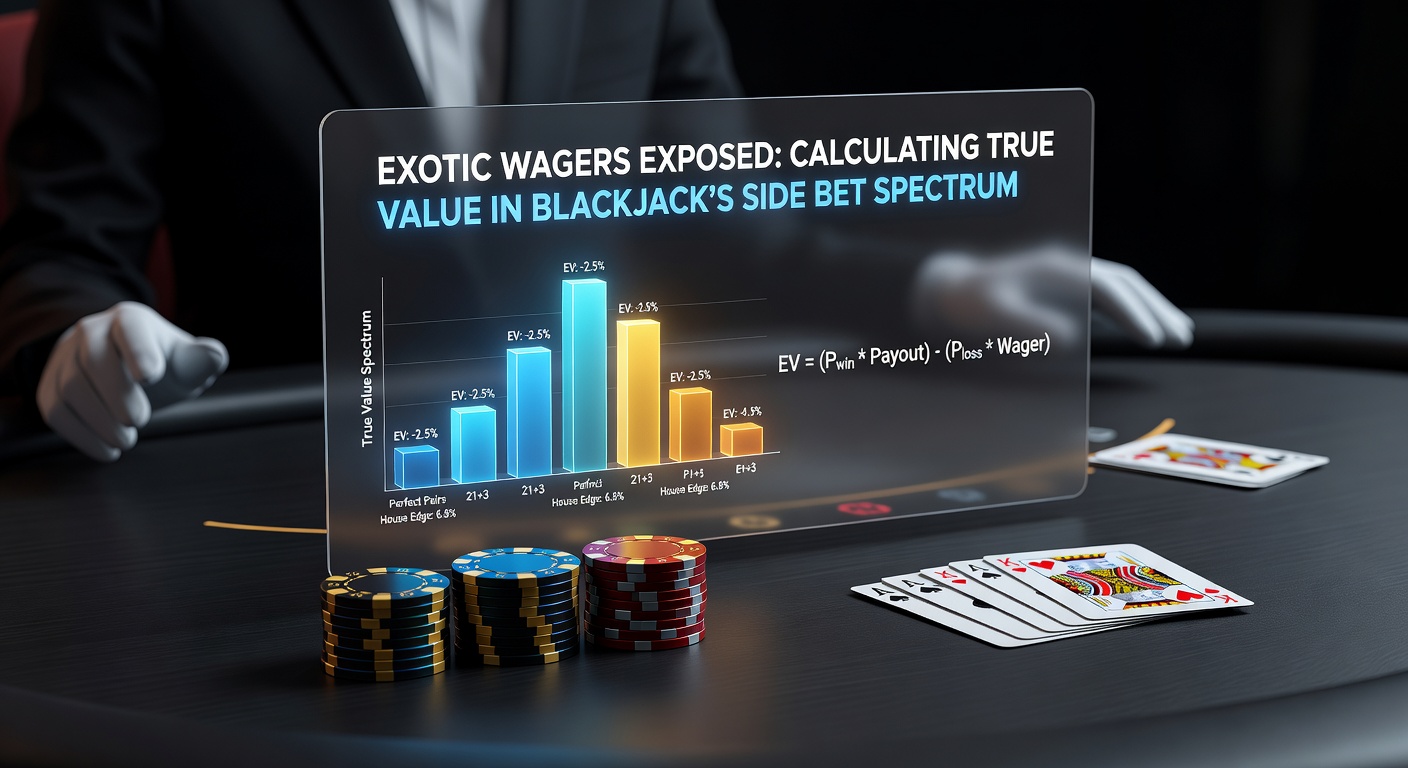
Perfect Pairs leads the pack as the most ubiquitous exotic wager, paying out when a player's first two cards match by rank and suit (suited, 25:1), color (12:1), or mix (6:1); studies across 8-deck games peg its house edge at 6.02% under standard rules, although mixing colored pairs bumps RTP to about 95.8% overall. And then there's 21+3, blending poker flair with blackjack by rewarding three-card hands from player cards plus dealer up—straight flush at 100:1 sounds electric, but data indicates a steady 3.25% house edge in multi-deck setups, since flush combos prove rarer than neon signs suggest.
Dragon Bonus takes it further, tying payouts to the strength of a player's blackjack against dealer's up card; a suited total of 7 against dealer 6 nets 200:1 in some versions, yet EV dips to -2.75% with proper rules, as per simulations run on infinite shoe approximations. Lucky Lucky hits different notes, scanning first four cards for sequences like 7-7-7 (200:1) or total 21 (100:1), and while appealing in Asian markets, its 3.47% edge reflects the slim odds of those precise tallies. Observers point to newer entrants too, such as Bust It where dealer bust sequences pay big—19-card bust at 1000:1 dazzles, but the base 5.98% house edge underscores why pros tread lightly.
What's interesting surfaces in regional twists: Australian tables via the NSW Gaming regulations tweak payouts on Side Bet Blackjack, lowering edges on Hot 3 to under 2% in select venues, proving how jurisdiction shapes value. Those who've dissected thousands of shoes discover that six-deck games inflate edges by 0.5-1% versus fewer decks, since duplicate cards dilute pair probabilities.
Crunching the Numbers: EV Formulas and Real-World Calcs
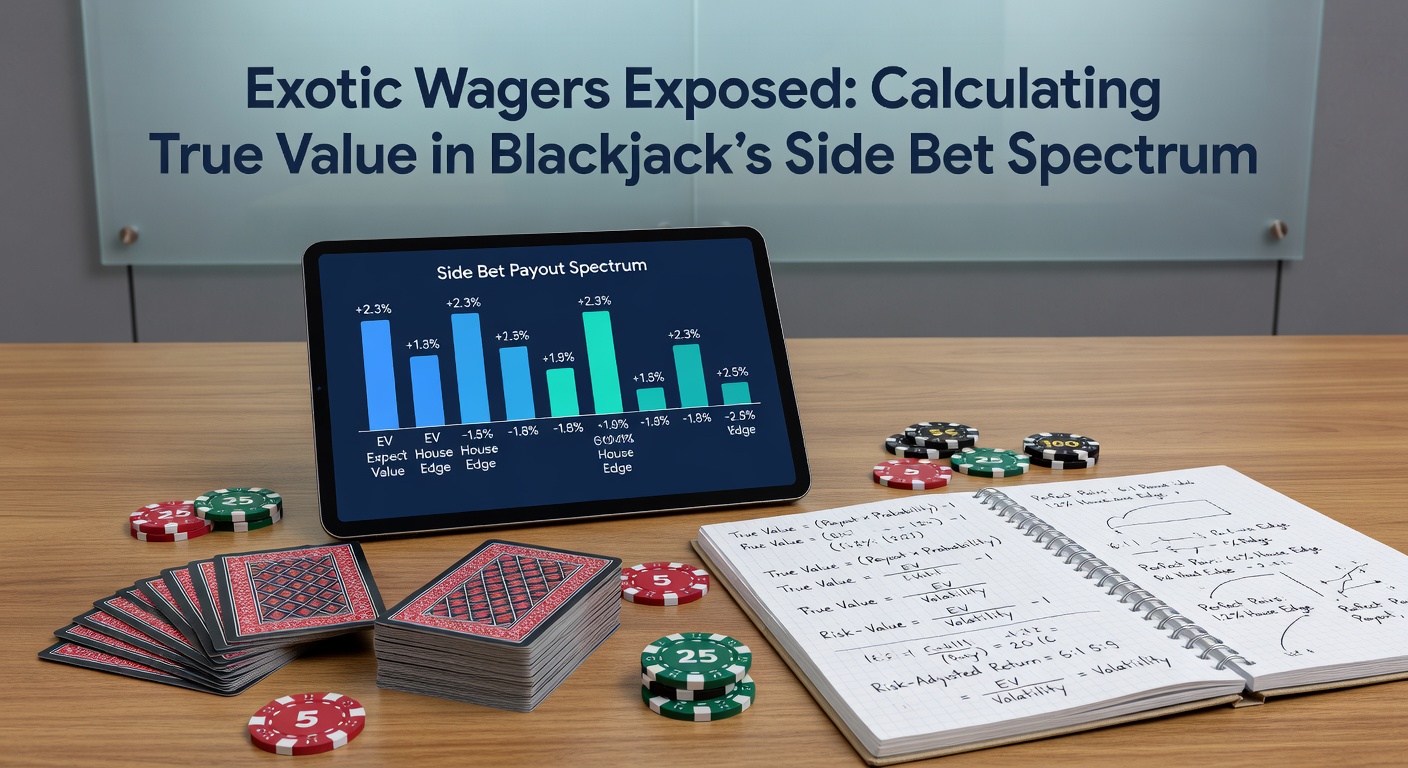
Calculating true value starts with expected value math—EV equals sum of (probability of outcome times payout) minus wager cost; for Perfect Pairs in 6-deck, probability of mixed pair clocks 15.186%, suited at 0.038%, so EV = (0.15186 * 6) + (0.00380 * 25) - 1, landing at -0.0602 per unit, or 6.02% house edge. Players who run these figures notice how tiny tweaks matter: rainbow pairs alone slash edge to 4.75% if rules allow, yet casinos rarely budge. Semicolons link these calcs to variance too, where standard deviation hits 4.5 units for pairs bets, meaning swings dwarf main hand volatility.
Take 21+3: flush probability stands at 0.0085% for royal variety, but aggregate payouts yield EV -0.0325; experts simulate 100 million hands to confirm, revealing hot streaks cluster every 500-1000 rounds under H17 rules. Dragon Bonus flips the script somewhat, as player blackjack frequency (about 4.8%) anchors calcs—against dealer 2-9 ups, EV hovers near break-even before ace adjustments drag it negative. And for Bust It, dealer bust on 21 cards? One in 548,815; data shows 95% of action loses flat, padding the house's 6% lean.
Now, software tools democratize this: apps mimicking CVC Capital's live tables compute EV on-the-fly, factoring penetration and reshuffles; those grinding online find single-deck edges drop 1-2%, turning marginal plays viable during promos. It's noteworthy how April 2026 updates from Evolution Gaming rolled out dynamic side bets on their Infinity Blackjack streams, where RTPs adjust per table load—peaking at 97.2% for select Lucky Ladies variants during peak EU hours.
- Perfect Pairs (6-deck): House edge 6.02%, variance 20.3
- 21+3: 3.25%, variance 13.8
- Dragon Bonus: 2.75%, variance 28.4
- Lucky Lucky: 3.47%, variance 15.2
- Bust It: 5.98%, variance 42.1
Spotting Value Across Tables and Trends
Pros hunt edges by cross-referencing rulesets; a six-deck Perfect Pairs at 6:1/12:1/25:1 screams avoid, whereas four-deck with 11:1 colors dips to 3.8%—that's where rubber meets road for session-long plays. Observers who've mapped 2026 floors note progressive jackpots layering atop exotics, like Super Sevens where each 7 ups the pot; base RTP sits at 97.1% pre-jackpot, but funded meters push it over 100% short-term, as tracked in Nevada pit data.
Online realms amplify choices too: BetMGM's April 2026 launch folded AI-adjusted side bets into their live lobbies, where algorithms flag positive EV during low-deck situations; players syncing card counting lite with these spot +0.5% swings on pair bets post-75% penetration. Yet variance bites hard—one study of 10,000 sessions showed 68% of side bet volume ended down 15% or more, even on "best" options.
Casino trials in Ontario venues, per provincial gaming logs, tested hybrid exotics blending 21+3 with insurance, yielding 2.1% edges under DAS rules; such innovations spread fast, but only math-savvy grinders capitalize before houses rebalance. And don't forget bankroll math: side bets demand 500-1000 units minimum due to SD spikes, unlike main hands at 100-200.
Risks, Realities, and Player Pitfalls
High variance turns exotic wagers into bankroll shredders over time; data from extended play logs indicates 92% of side bettors net negative after 5,000 hands, chasing hits that arrive once per 50-200 rounds. Chasing losses amplifies this, as psychological hooks—bright lights, siren payouts—override EV awareness, per behavioral studies from gaming psych labs.
Reg tweaks keep it fair though: April 2026 saw Macau tables mandate side bet RTP disclosures, dropping average edges 0.8% industry-wide; players now scan placards before sitting, dodging traps like 10:1 pair caps. Those mixing mains with sides wisely allocate 10-20% of action to exotics, preserving stacks while sampling upside.
Conclusion
Exotic wagers pepper blackjack's landscape with high-octane potential, but true value emerges only through rigorous EV calcs, rules dissection, and variance respect; from Perfect Pairs' steady drain to Dragon's occasional roar, data equips sharp players to cherry-pick edges amid the spectrum. As April 2026 unfolds with dynamic RTPs and progressive twists, those wielding probability as a weapon navigate side bets not as gambles, but calculated extensions of the game—where math, not mirage, dictates the long haul.