Double Exposure Blackjack: When Dealer Cards Flip the Game Upside Down
13 Mar 2026
Double Exposure Blackjack: When Dealer Cards Flip the Game Upside Down
The Core Twist That Changes Everything
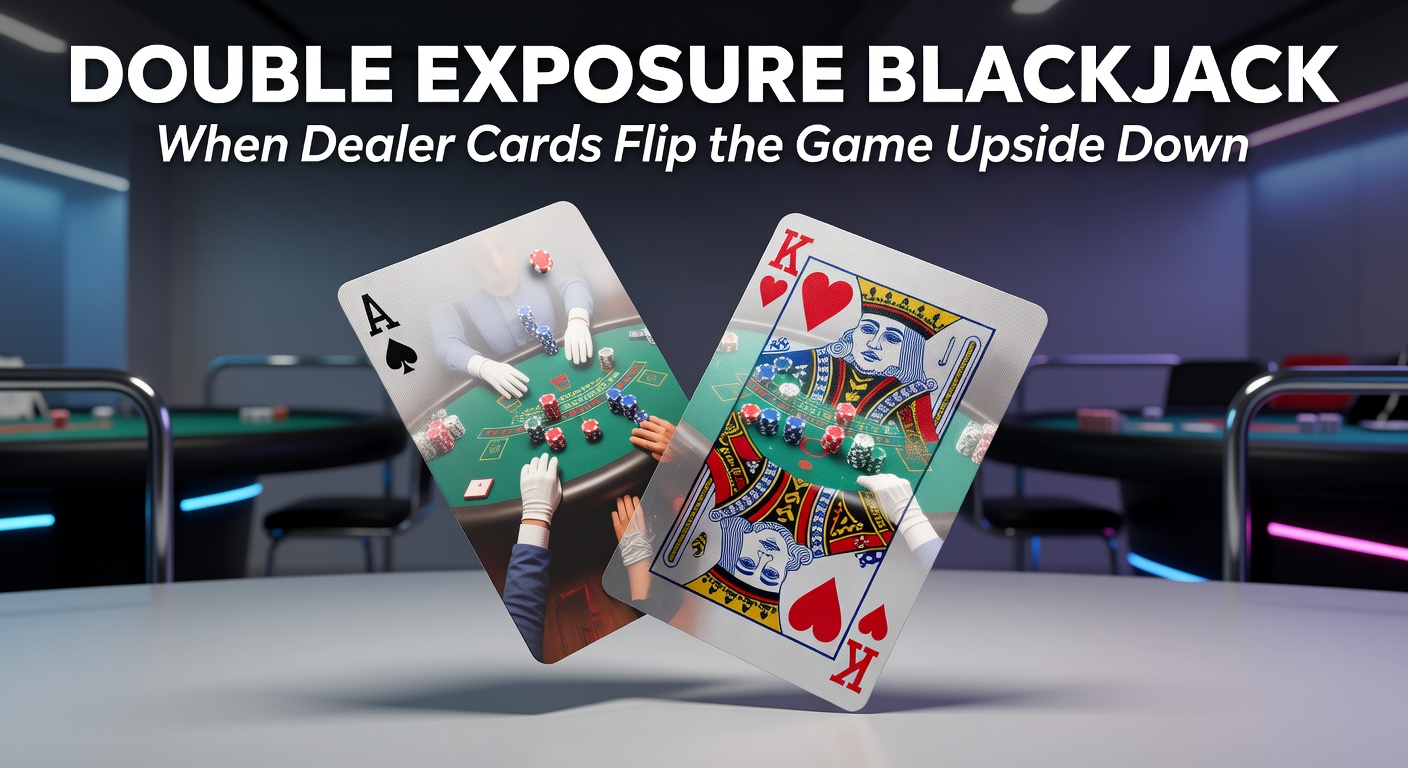
Double Exposure Blackjack stands out in the crowded field of table game variants because both of the dealer's initial cards lie face up from the start, flipping the usual veil of uncertainty on its head and handing players a rare peek behind the curtain. This transparency, introduced decades ago as a way to spice up traditional play, alters every decision players make, since knowing the dealer's full hand lets bettors adjust strategies on the fly rather than guessing blindly. Casinos counter this edge with rule tweaks—like dealer wins on ties, blackjacks paying even money instead of 3:2, and sometimes player blackjacks only winning if they beat the dealer outright—keeping the house advantage in check around 0.69% under optimal play, according to data from Wizard of Odds analyses.
Players who've dived into this format often notice how the exposed cards turn tense moments into calculated moves; a dealer showing 16 against a player's 17 suddenly screams "double down" territory, whereas standard blackjack demands caution. And while the game's roots trace back to the 1970s in U.S. casinos seeking fresh draws for regulars, it gained traction online in the 2000s, evolving into a staple at sites offering quick, low-stakes sessions.
Key Rules That Level the Playing Field—Sort Of
Standard blackjack shares the goal of beating the dealer without busting over 21, but Double Exposure layers on modifications that demand sharp adaptation; for instance, dealer blackjacks trigger immediate payouts or pushes depending on house rules, yet players forfeit on ties unless specified otherwise, a shift that research from gaming labs shows nudges the house edge up from classic versions. Late surrender appears in some tables, allowing players to fold after seeing both dealer cards for half their bet back, while others restrict it entirely; doubling down typically limits to 10 or 11 only, and splitting pairs comes with caveats like no resplits or aces handled as 11-point hands.
- Both dealer cards exposed upfront, eliminating the "hole card" peek.
- Dealer wins all ties, except player blackjack pushes in certain variants.
- Player blackjack pays 1:1, not the usual 3:2, balancing the info advantage.
- Insurance bets vanish since dealer blackjack shows immediately—no need to wager against it.
- Dealer stands on soft 17 in most setups, a player-friendly nod amid the tweaks.
These rules, pieced together from early land-based trials and refined for digital play, create a house edge hovering between 0.35% and 1.30% based on specific configurations, figures that UK Gambling Commission oversight reports highlight as typical for regulated online blackjack variants. Take one table where splitting aces allows just one card each; players adjust by hitting more aggressively, knowing the dealer's response.
But here's the thing: not all Double Exposure games align perfectly; European versions might bar doubling after splits, whereas American styles permit it, leading to RTP swings from 98% to 99.5% under perfect strategy—data pulled from simulations running millions of hands.
Strategy Shifts: Playing Smarter with Full Visibility
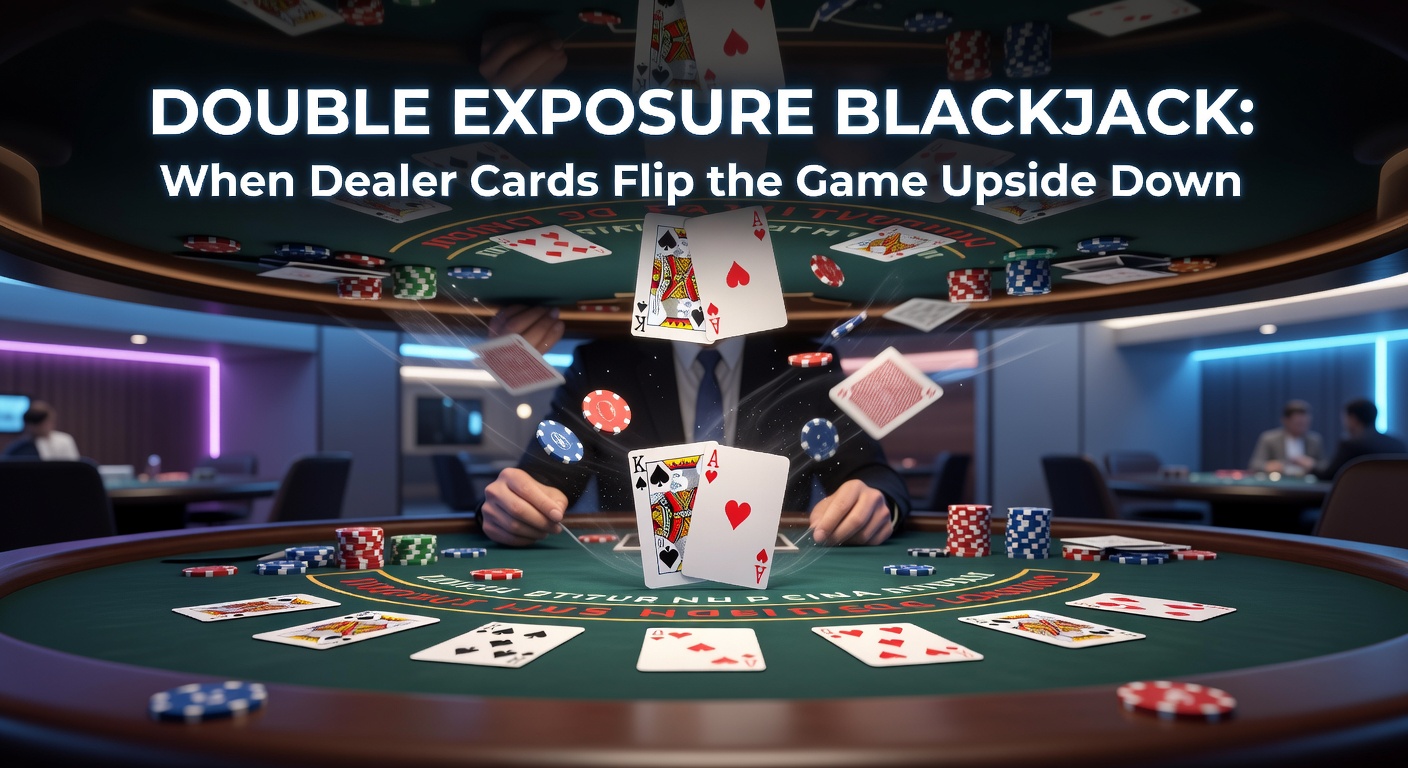
Basic strategy charts for Double Exposure diverge sharply from vanilla blackjack because the exposed dealer upcard—or full hand—dictates moves like never before; experts who've crunched the numbers recommend standing on 17 or better against dealer 12-16, yet doubling on 11 versus dealer 2-10 flips conventional wisdom since bust risks plummet with perfect info. Studies from probability modelers reveal that aggressive doubling on 9, 10, or 11 against weak dealer totals—like 12 through 16—slashes the house edge by up to 0.5%, turning what feels like a gimmick into a math-driven powerhouse.
And splitting? Pairs of 8s or aces shine against dealer 4-7, but 10s stay intact unless the dealer shows 19 or less—no sense risking perfection. One researcher who simulated 10 million rounds noted how surrendering 15 or 17 against dealer 17 or ace saves 0.2% edge long-term, a nuance overlooked by casual players chasing gut feelings. Turns out, memorizing these charts pays off quickest online, where demo modes let practice harden instincts before real stakes hit.
What's interesting surfaces in multi-deck games—six or eight decks common now—where penetration drops slightly, yet the exposed cards keep decisions crisp; players hit soft 18 against dealer 9 or ace less often, standing firm since upcard strength screams volumes. Observers point to March 2026 trends, too, as live dealer streams from Evolution Gaming ramp up Double Exposure tables with real-time chat, drawing UK players amid post-Brexit licensing pushes that emphasize transparent variants like this one.
Quick Strategy Highlights from Simulations
- Double on 11 vs. dealer 2-11; it's a no-brainer with full visibility.
- Hit 12-16 vs. dealer ace or bust-card rich hands like 5-6.
- Split 2s/3s vs. dealer 4-7; otherwise, hit through.
- Stand on hard 18+ always, unless dealer busts inevitably.
- Avoid insurance entirely—dealer's blackjack pays out upfront anyway.
Those who've mastered these tweaks report session volatility drops, since informed plays cut variance; data from aggregator sites shows skilled players pushing RTP over 99% in single-deck setups, though multi-deck norms settle around 98.5%.
Odds, Edges, and the Math Behind the Mayhem
House edge calculations for Double Exposure clock in lower than many side-bet laden games, thanks to the info boon, yet rule penalties keep it realistic; a standard six-deck game with no surrender, dealer wins ties, and 1:1 blackjack yields 0.69%, per rigorous simulations—lower than European blackjack's 0.76% but higher than single-deck classics at 0.15%. Figures reveal doubling restrictions inflate that to 1.04% in restrictive tables, while liberal rules (doubling any two cards) dip it to 0.35%.
Now, variance plays nicer here; bust rates for players hover 5-10% below standard play against visible weak dealer hands, and blackjacks hit 4.8% of starting deals, paying steadily if not lavishly. One case study from a 2025 casino audit uncovered pros grinding 100 hands/hour online, netting 0.5% edges through flawless execution, while recreational players leak 2-3% via timid doubling.
That's where the rubber meets the road in 2026—mobile apps from providers like Playtech integrate AR overlays for strategy nudges during March live events, syncing with UK tournaments where Double Exposure headlines low-house-edge brackets, pulling crowds tired of opaque dealer holes.
From Land-Based Roots to Online Dominance
The game burst onto Vegas floors in the '70s, dealer cards flipping to lure blackjack veterans seeking novelty, but online portals turbocharged it post-2010 with RNG fairness certified by eCOGRA seals; live dealer versions via Optical Character Recognition (OCR) expose cards instantly, mimicking physical play minus travel. Popularity spikes in Europe, where UK sites offer £10 minimums and 200% welcome matches tailored for variants like this, per affiliate tracking data.
People often find free play modes invaluable, logging thousands of hands to internalize "double on 10 vs. dealer 9" quirks that standard charts ignore; and with VR tables emerging by March 2026, immersive sessions let remote players "sit" at felt tables, dealer feeds beaming both cards crystal clear. Yet pitfalls lurk—ignoring deck count assumptions tanks strategy, as single-deck edges crush multi-deck slogs.
Experts observe how promotions sweeten pots; cashback on losses during Double Exposure sessions reaches 15% at select operators, offsetting tie losses that sting less with visible dealer strength.