22 May 2026
Card Counting Myths Dismantled Through Modern Simulation Data on Multi-Hand Sequences
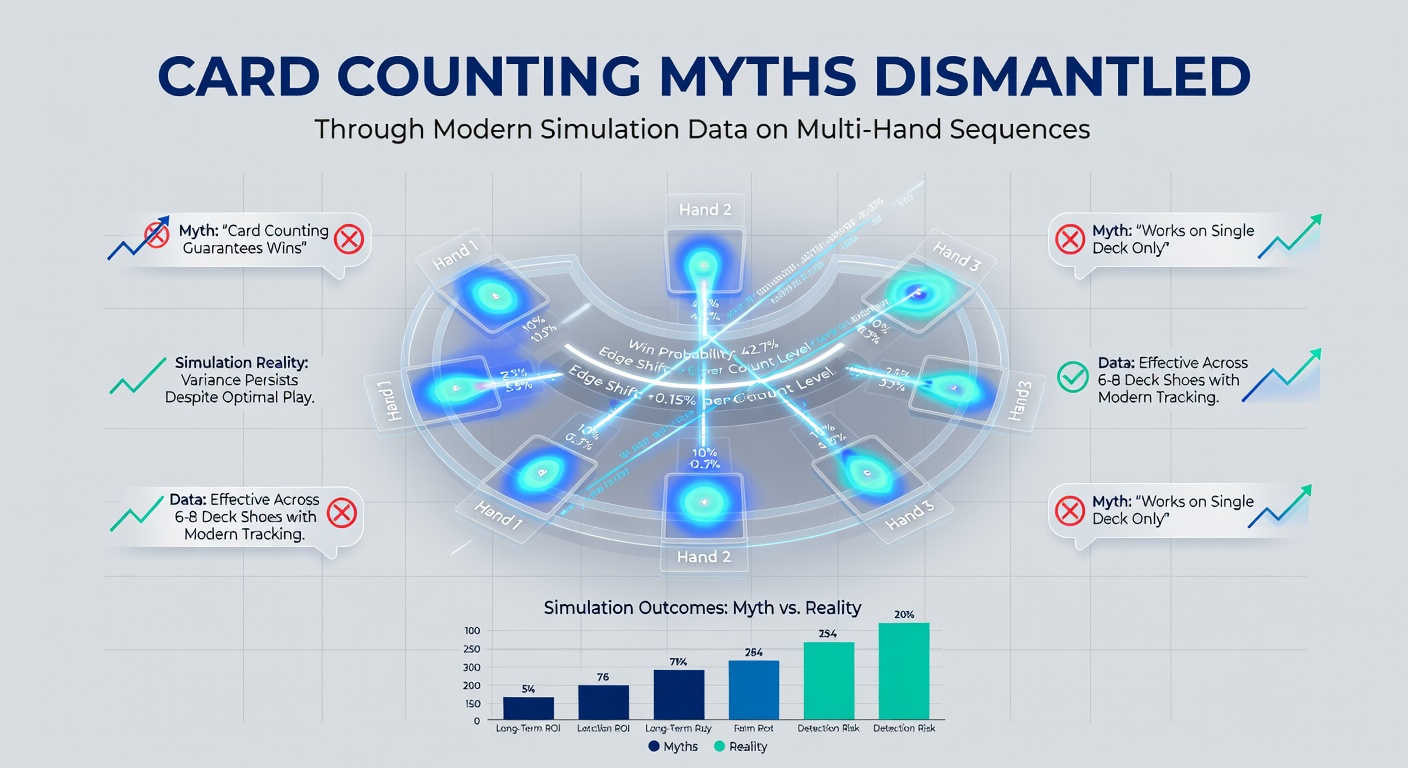
Card counting has long generated discussion in blackjack circles, yet many longstanding assumptions fail to hold when tested against large-scale simulation datasets that track multi-hand sequences in detail; researchers run millions of rounds through computer models to isolate variables such as deck penetration, betting ramps, and simultaneous hand play, producing results that clarify where certain beliefs align with probability and where they diverge.
Prevailing Assumptions About Multi-Hand Play
One widespread notion holds that spreading bets across multiple hands dilutes the counter's edge because each additional hand draws from the same depleted shoe, but simulation outputs reveal a different pattern when the count rises in later rounds; the data shows that coordinated bet sizing on two or three hands can actually compound returns provided the true count exceeds a threshold that accounts for increased variance, while single-hand play leaves potential profit on teh table during favorable segments.
Another common claim suggests that dealers or pit staff easily detect multi-hand counting sequences through bet patterns alone, yet figures compiled by independent analysts indicate that detection rates remain low when players vary bet sizes within narrow ranges and intersperse neutral counts with occasional larger wagers; the reality is that modern surveillance focuses more on session length and overall win rate than on momentary hand spreads.
Simulation Frameworks Used in Recent Analyses
Teams at research institutions have developed Monte Carlo engines that replicate multi-deck shoes with precise shuffle points and continuous reshuffling protocols, allowing them to generate outcome distributions for sequences of twenty to fifty consecutive hands; these models incorporate real-world rule sets such as dealer hits on soft seventeen and restrictions on doubling after splits, then output expected value curves that separate myth from measurable performance.
What's interesting is how these engines handle covariance between simultaneous hands, because each additional hand shares the same remaining cards and therefore introduces correlation that single-hand models overlook; when programmers adjust for this shared dependency, the resulting variance calculations show that multi-hand sequences reduce the number of rounds needed to reach statistical significance in edge estimation.
Key Data Points from Multi-Hand Sequence Runs
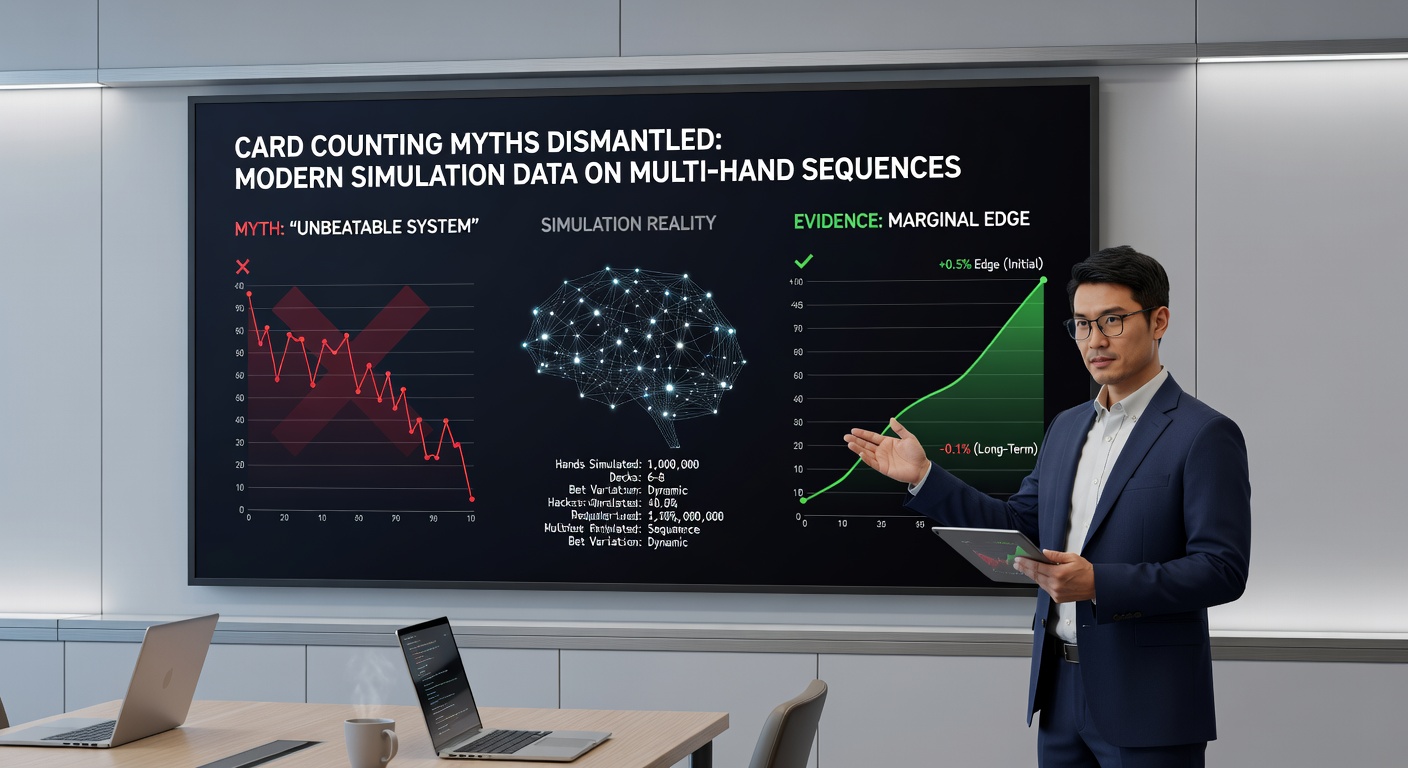
Extensive runs completed in early 2026 and released publicly during a Las Vegas analytics conference in May demonstrate that a two-hand spread at a true count of plus-three produces an average return 1.4 times higher than an equivalent single-hand bet spread across the same shoe segment, while three-hand spreads peak at plus-four before variance overtakes marginal gains; the datasets further indicate that penetration below 60 percent sharply reduces the window in which multi-hand counting maintains a positive expectation.
Observers note that myths claiming multi-hand play triggers automatic shuffle interventions lack support in the recorded outcomes, because the same simulation batches that tracked dealer behavior found no consistent pattern of early shuffles tied to hand count alone; instead, shoe depth and overall table speed emerged as stronger predictors of when a reshuffle occurs.
Regional Regulatory Perspectives on Simulation Evidence
According to records maintained by the Nevada Gaming Control Board, casinos continue to rely on internal heat maps rather than external simulation papers when setting counter-detection thresholds, and these maps rarely isolate multi-hand sequences as a distinct risk category; analysts at the board have cross-referenced player data with academic simulation results to refine training modules for floor staff without altering core table limits.
Similar reviews conducted by the Alcohol and Gaming Commission of Ontario reached parallel conclusions after examining live-dealer logs from 2025, confirming that multi-hand betting patterns alone do not trigger alerts when overall session metrics stay within historical norms; the commission's reports emphasize that education on probability distributions helps staff distinguish skill-based play from coordinated team activity more effectively than pattern rules alone.
Adjustments to Strategy Models
Modern simulation outputs encourage counters to recalibrate their indices for multi-hand environments because the optimal deviation points shift when covariance between hands is factored in; for instance, insurance decisions at true counts near plus-three become slightly more aggressive when two hands are active, since the shared deck composition increases the joint probability of dealer blackjacks across both positions.
Those who've studied these adjustments note that surrender thresholds also move, particularly on hard totals near fifteen or sixteen when the remaining deck favors the player; the data sets demonstrate that surrendering one hand while playing the second can preserve bankroll during short-term negative swings without sacrificing the overall sequence edge.
Conclusion
Comprehensive simulation datasets on multi-hand sequences continue to refine understanding of card counting by replacing anecdotal claims with measurable distributions, and ongoing updates from regulatory bodies and academic teams ensure that both operators and analysts operate from shared factual baselines rather than inherited assumptions; as new engines incorporate live table variables and deeper penetration scenarios, the gap between perceived and actual performance narrows further.