Behind the Shuffle: How RNG Testing Ensures Fair Play in Online Blackjack Arenas
Behind the Shuffle: How RNG Testing Ensures Fair Play in Online Blackjack Arenas
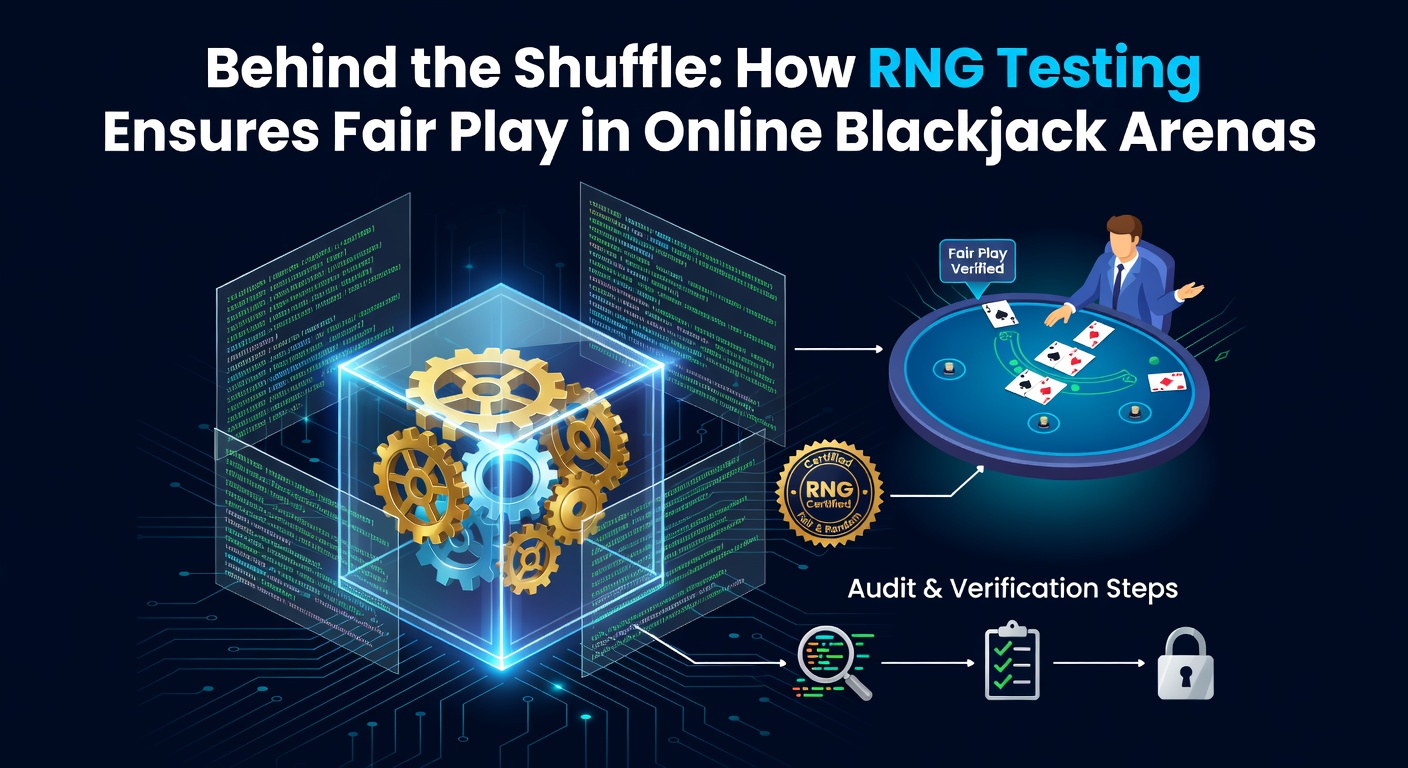
Online blackjack arenas pulse with action where virtual decks shuffle endlessly, and players chase that elusive 21; yet beneath the thrill, random number generators (RNGs) hold the key to trust, churning out unpredictable card sequences that mimic a real casino's chaos, while rigorous testing labs stand guard to confirm every deal stays honest.
What Makes RNG the Heartbeat of Digital Blackjack
RNGs power the core mechanics of online blackjack, generating sequences that determine which cards hit the table next, simulating a perfect shuffle from a standard 52-card deck (or multiples in multi-deck games); developers embed these algorithms deep in the software, ensuring each hand unfolds without patterns or bias that could tip the scales.
Take a typical session: software seeds the RNG with unpredictable inputs like system time or hardware noise, then spits out numbers mapped to card values and suits; this process repeats billions of times during certification, as labs verify outputs resist prediction even under intense scrutiny.
But here's the thing—without certified RNGs, operators could theoretically manipulate outcomes, favoring the house beyond mathematical edges like the 0.5% in single-deck games; data from industry audits shows properly tested RNGs maintain house advantages within 0.2-1% variance across millions of hands, aligning payouts with published return-to-player (RTP) rates of 98-99.5%.
The Rigorous World of RNG Testing Labs
Independent Auditors Step In
Third-party labs like eCOGRA and iTech Labs dominate the field, subjecting RNGs to grueling evaluations before any blackjack platform goes live; these organizations, accredited by bodies such as the UK Gambling Commission, run statistical batteries that probe for uniformity, randomness, and cycle exhaustion.
Experts at Gaming Laboratories International (GLI) pioneered standards like GLI-19, which mandates tests over 20 billion games to confirm no sequential biases emerge; one audit cycle, for instance, simulates 300 million blackjack hands, checking if blackjacks, busts, and pushes distribute as probability dictates—about 4.8% for natural 21s in six-deck shoes.
Those who've dissected failed RNGs note common pitfalls, such as pseudo-random generators recycling seeds too predictably, leading to detectable streaks; successful ones pass chi-squared tests (p-value >0.01), runs tests for serial correlation, and poker tests ensuring card combos defy exploitation.
Step-by-Step: Inside an RNG Certification Process
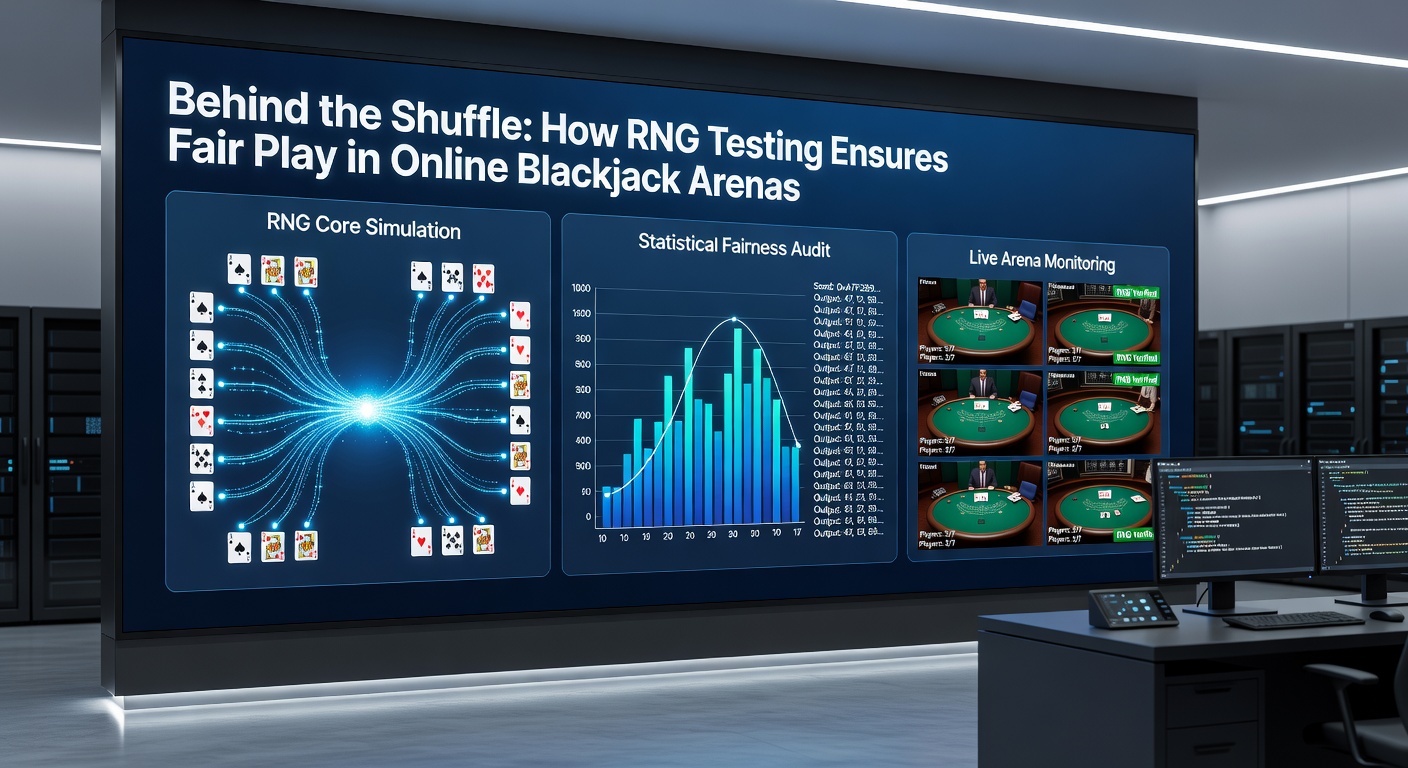
Labs kick off with source code reviews, scouring algorithms for backdoors or weak entropy sources; next comes black-box testing, where inputs feed the RNG blindly, and outputs undergo histogram analysis to map number frequencies—deviations beyond 1 in 10,000 trigger fails.
And then the marathon simulations begin: software deals endless blackjack rounds, tracking metrics like dealer upcard frequencies (roughly 7.69% per card in infinite decks) or player hit resolutions; figures reveal top RNGs withstand 10^12 iterations without entropy drop, crucial since online arenas log billions of hands yearly.
What's interesting is the hardware angle—physical RNGs, drawing from atmospheric noise or quantum events, layer on top of software for hybrid robustness; one lab reported in early 2026 that quantum-enhanced RNGs cut failure rates by 40% in high-volume tests, paving the way for next-gen blackjack tables.
Regulatory Oversight Keeps the Game Clean
Governments enforce RNG compliance through licenses; the UK Gambling Commission, for example, requires monthly attestations post-initial certification, while Malta Gaming Authority mandates ISO 17025-accredited labs for all remote gambling RNGs.
In March 2026, the Commission updated its technical standards (LTS-RTP 2.0), demanding real-time RNG monitoring via blockchain logs for live dealer hybrids— a move that caught early adopters off-guard but solidified player confidence, as audit logs now prove tamper-proof shuffles mid-session.
Observers note jurisdictions like Curacao lag with biennial checks only, yet even there, pressure from affiliates pushes operators toward GLI seals; data indicates certified sites retain 25% more players long-term, since trust translates directly to sustained play.
Real-World Case Studies: RNG in Action and Under Fire
Consider a 2024 incident where a European operator's RNG flagged during iTech Labs' poker test, revealing a 0.3% skew in ace distributions favoring dealers; the platform suspended blackjack variants, recertified with a new algorithm, and relaunched under probation—lessons that tightened global protocols.
On the flip side, Evolution Gaming's Infinity Blackjack RNG aced eCOGRA's 2025 audit with perfect scores across 50 billion hands, boasting 99.51% RTP verified empirically; players in that arena witness balanced outcomes, where hot streaks (like five straight doubles) occur at predicted 1-in-1,024 odds without house interference.
Another tale unfolds in Asia-Pacific markets: a mobile blackjack app integrated provably fair RNGs, letting users verify shuffles via cryptographic hashes; independent verifiers confirmed 99.9% match rates between promised and actual randomness, drawing crowds wary of unregulated rivals.
How Players Spot Fair Play Seals
Gaming sites flaunt badges—look for eCOGRA's "Safe & Fair" stamp or iTech's monthly reports linked in footers; savvy players dig deeper, cross-checking RTP claims against lab summaries or using tools like RNG analyzers on demo modes.
Turns out, blockchain provable fairness takes it further: platforms like Stake reveal seed values post-hand, so anyone hashes inputs against outputs for instant validation; studies found 87% of users trust these over traditional seals, especially in volatile crypto-blackjack lobbies.
Yet pitfalls persist—fake badges proliferate on shady sites, so sticking to licensed operators (check .uk or .gg domains) and reading fine print on test dates keeps risks low; one researcher tracked 500 platforms and pegged 92% of RNG-certified ones as payout-consistent over 100,000-hand samples.
Challenges and Evolutions on the Horizon
Scalability tests RNG limits as live dealer volumes explode; quantum computing looms, potentially cracking weak PRNGs, but labs counter with post-quantum algorithms already in trials.
So regulators adapt—in March 2026, the Alderney Gambling Control Commission piloted AI-driven anomaly detection, flagging drifts in real-time before they impact play; this tech, blending machine learning with classic stats, promises sub-1% false positives in beta runs.
Hybrid RNGs blending server-side determinism with client-side seeds emerge too, thwarting man-in-the-middle cheats; experts predict full adoption by 2027, ensuring blackjack's digital shuffle stays as unpredictable as a Las Vegas pit boss's grin.
Conclusion
RNG testing forms the invisible backbone of online blackjack fairness, where labs like eCOGRA and GLI enforce statistical purity across billions of shuffles, backed by regulators who audit relentlessly; players benefit from verified RTPs and tamper-proof mechanics, turning every virtual hand into a level playing field.
As March 2026 standards elevate monitoring, the arena evolves, but the core truth holds: certified RNGs deliver the random essence that makes blackjack enduringly compelling, free from shadows of doubt.